
Running Shoes vs Walking Shoes – What’s the Difference?
Choosing the right footwear is essential for comfort, performance, and injury prevention. Many people assume that running shoes and walking shoes are interchangeable, but in reality, they are designed for very different movement patterns. Wearing the wrong type can lead to discomfort, fatigue, or even long-term injuries. In this guide, we’ll break down the key differences between running shoes and walking shoes to help you choose the right pair for your lifestyle.
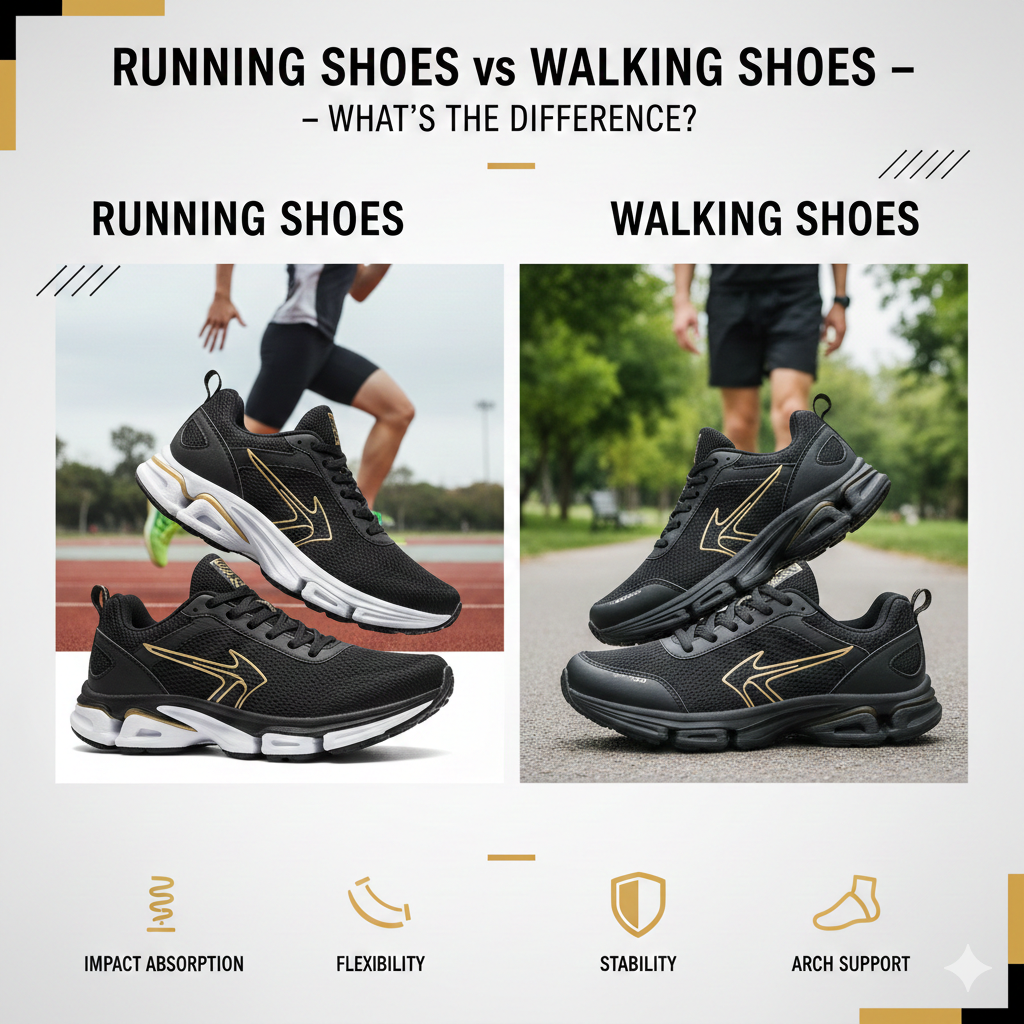
Running Shoes vs Walking Shoes – Key Differences in Movement and Impact
The biggest difference between running and walking lies in how your feet strike the ground. Running involves a higher impact force because both feet leave the ground at the same time. Walking, on the other hand, is a low-impact activity where one foot is always in contact with the ground.
Because running generates more shock, running shoes are built to absorb impact efficiently, while walking shoes focus on providing stability and smooth heel-to-toe transition.
Cushioning and Shock Absorption in Running Shoes vs Walking Shoes
Running shoes have thicker cushioning, especially in the heel and forefoot areas. This extra padding helps absorb the high impact created when your foot strikes the ground at faster speeds.
Walking shoes feature lighter and thinner cushioning because walking doesn’t require the same level of shock absorption. Too much padding in walking shoes can actually feel uncomfortable and disturb the natural walking motion.
Key takeaway:
Running shoes = maximum cushioning
Walking shoes = balanced, firm cushioning
Running Shoes vs Walking Shoes – Heel Design and Flexibility
Running shoes usually have a higher, well-cushioned heel to protect the foot during heel strikes and forward momentum. They are flexible in both the forefoot and heel to support quick movements.
Walking shoes have a lower heel height and are primarily flexible at the forefoot. This supports a natural rolling motion from heel to toe, which is essential for comfortable walking.
Running Shoes vs Walking Shoes – Support and Stability
Walking shoes are designed with stability in mind. Since walking involves repetitive, even movements, these shoes often offer firmer midsoles and enhanced arch support for long-duration comfort.
Running shoes prioritize responsiveness and motion control. Depending on your running style, they may include features like pronation support or energy-return midsoles to improve performance and reduce fatigue.
Running Shoes vs Walking Shoes – Weight and Breathability
Running shoes are generally lightweight and breathable to enhance speed and reduce foot strain during intense workouts. Advanced mesh materials are often used to allow better airflow.
Walking shoes are slightly heavier but more durable. They are built for prolonged wear, making them perfect for daily errands, travel, or long walks.
Running Shoes vs Walking Shoes – Can You Use Them Interchangeably?
Yes, you can walk in running shoes for short periods. However, using them regularly for walking may wear them out faster and might not provide the ideal comfort or posture support for walking.
On the other hand, using walking shoes for running is not recommended. They lack the shock absorption and flexibility required for high-impact movements, increasing the risk of injury.
Running Shoes vs Walking Shoes – Which One Should You Choose?
->Choose running shoes if you jog, sprint, or train regularly
->Choose walking shoes if you walk daily, travel often, or stand for long hours
If your lifestyle includes both activities, consider owning separate pairs to get the best performance and comfort from each.
Understanding the difference between running shoes and walking shoes can significantly improve your comfort and prevent unnecessary strain on your feet. The right footwear supports your movement, enhances performance, and protects your foot health. Invest wisely, move better, and let your shoes work for you.Running involves high-impact training, where both feet leave the ground at the same time. Walking is a low-impact exercise, with one foot always on the ground.